
Coach House Media Room - Maidstone
A Media Room Designed to Endure – Coach House Cinema in Maidstone, Kent
This media room forms part of the refurbishment of a former coach house located within the grounds of a private residence near Maidstone, Kent. Completed in 2008, the project demonstrates how thoughtful cinema design principles can remain relevant and visually contemporary for many years.
At the time, residential cinema rooms were far less common than they are today. The client’s ambition was to transform the coach house into an entertainment suite that could serve both as a relaxed media space and as a fully immersive cinema when required.
Our role began during the early planning stages of the refurbishment, allowing the room’s layout, infrastructure and control systems to be designed as an integrated part of the renovation.
A Room That Transforms
The concept for the space centred around flexibility.
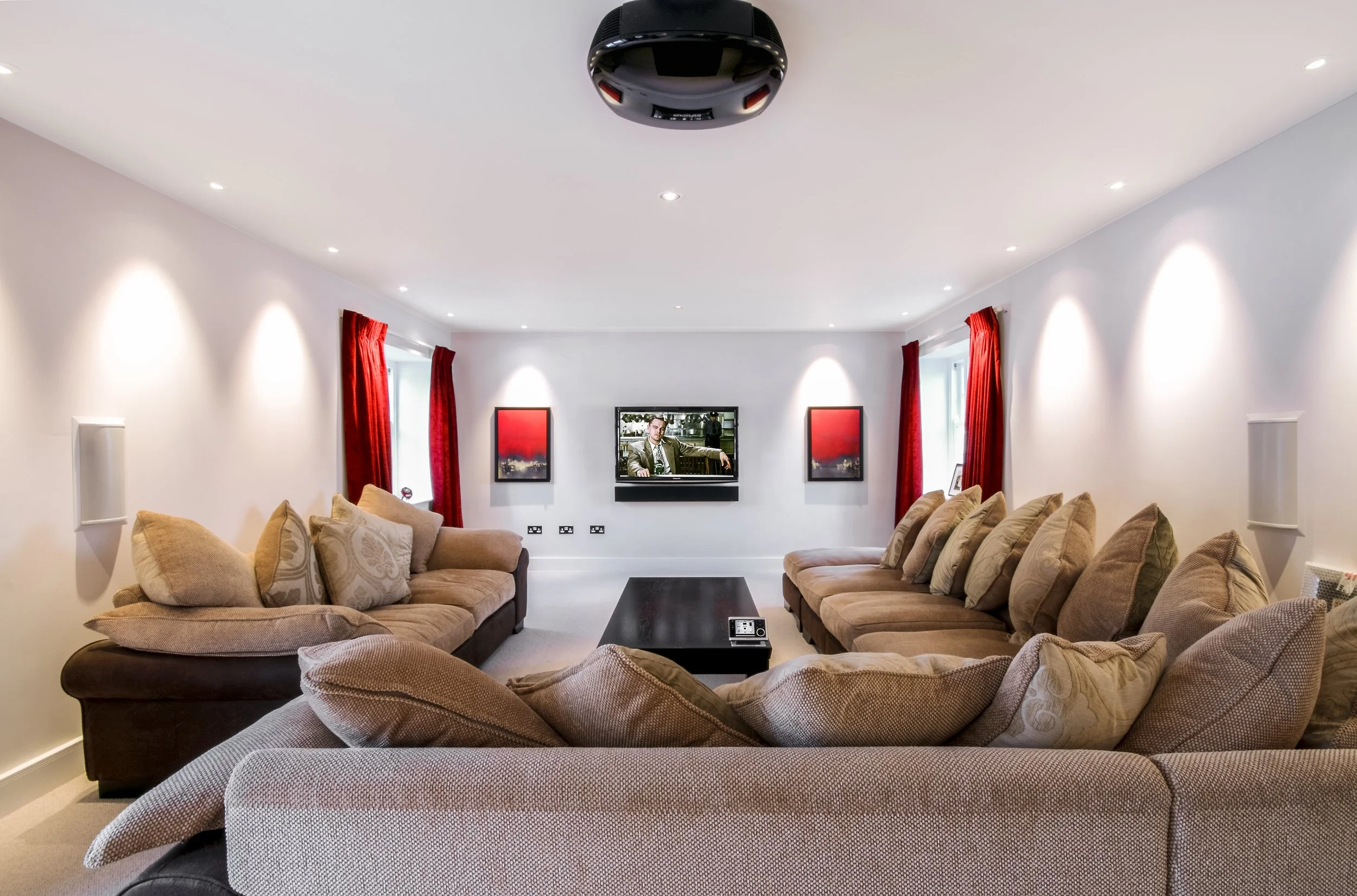
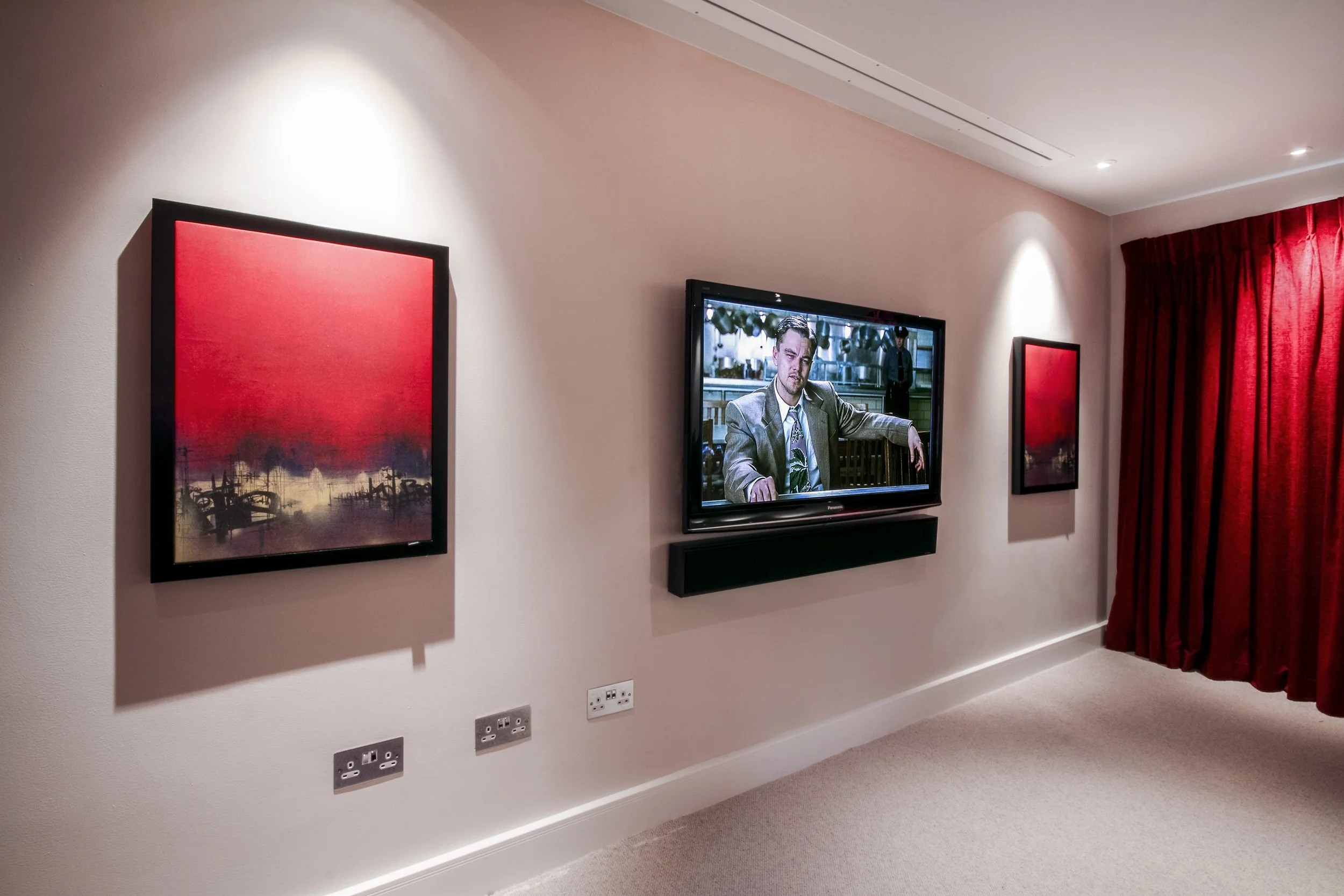
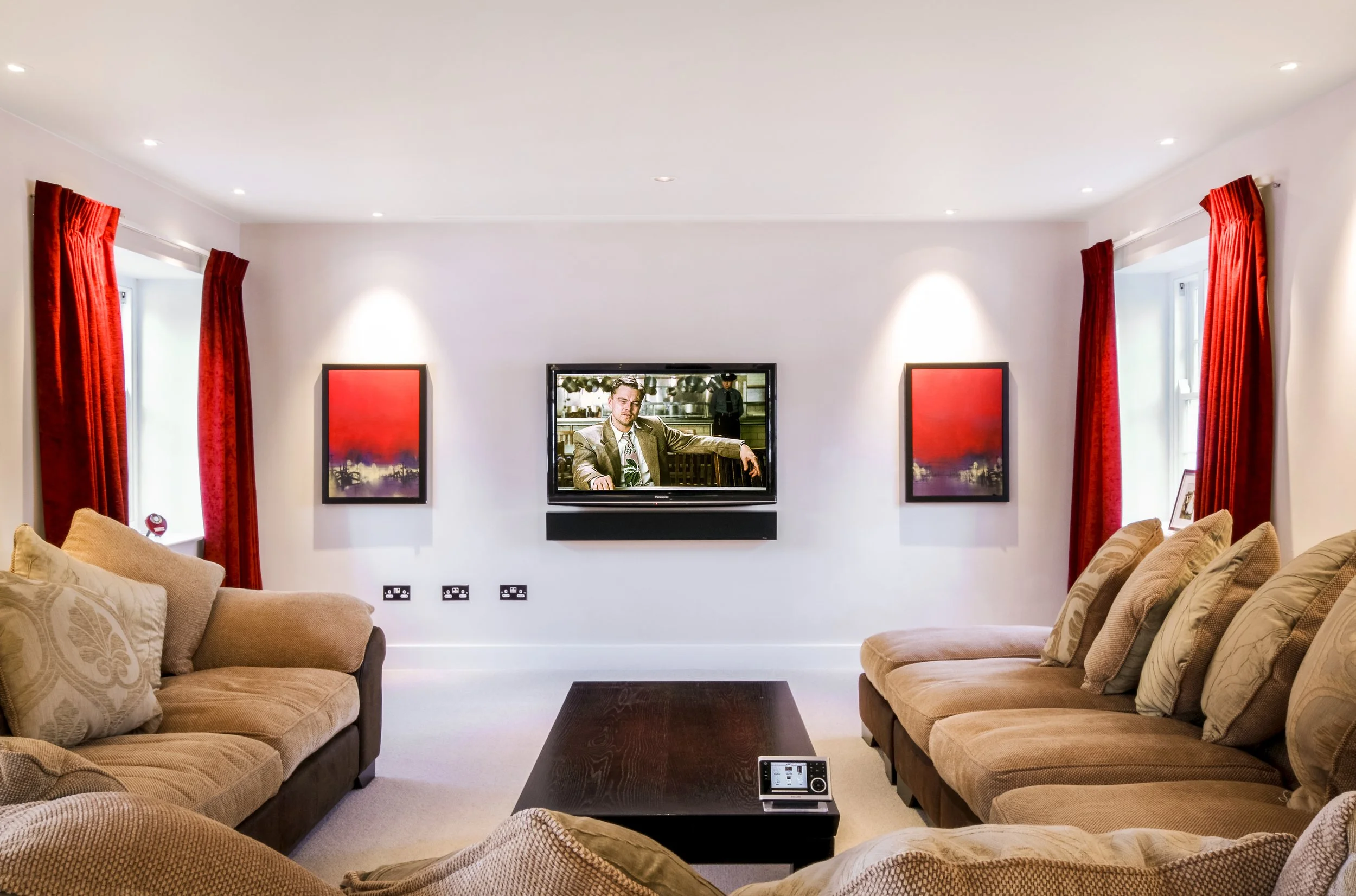
For everyday use, the room functions as a comfortable media lounge centred around a wall-mounted television — ideal for casual viewing and social gatherings.
When it is time for film night, the room transitions seamlessly into a cinema environment.
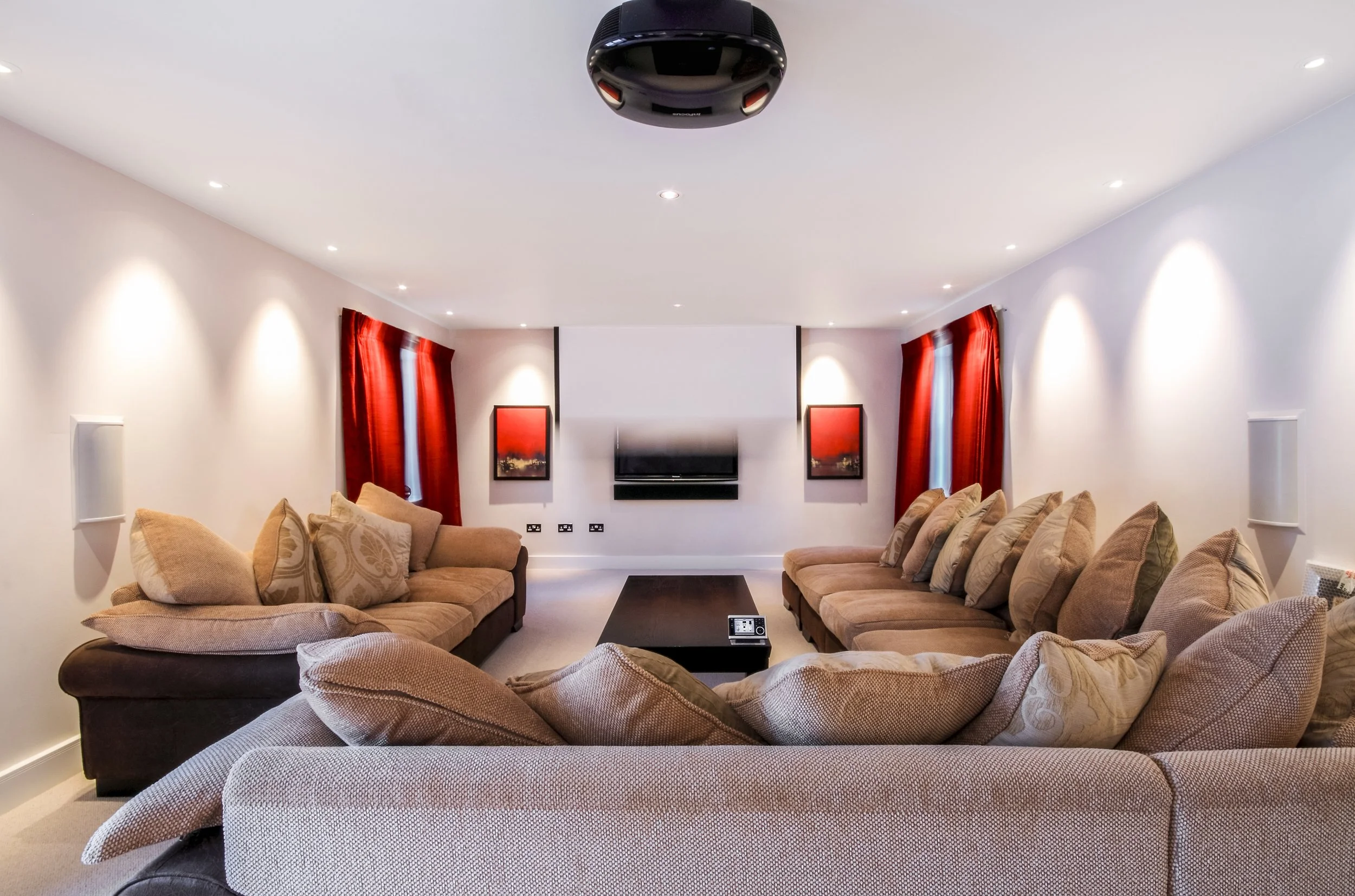
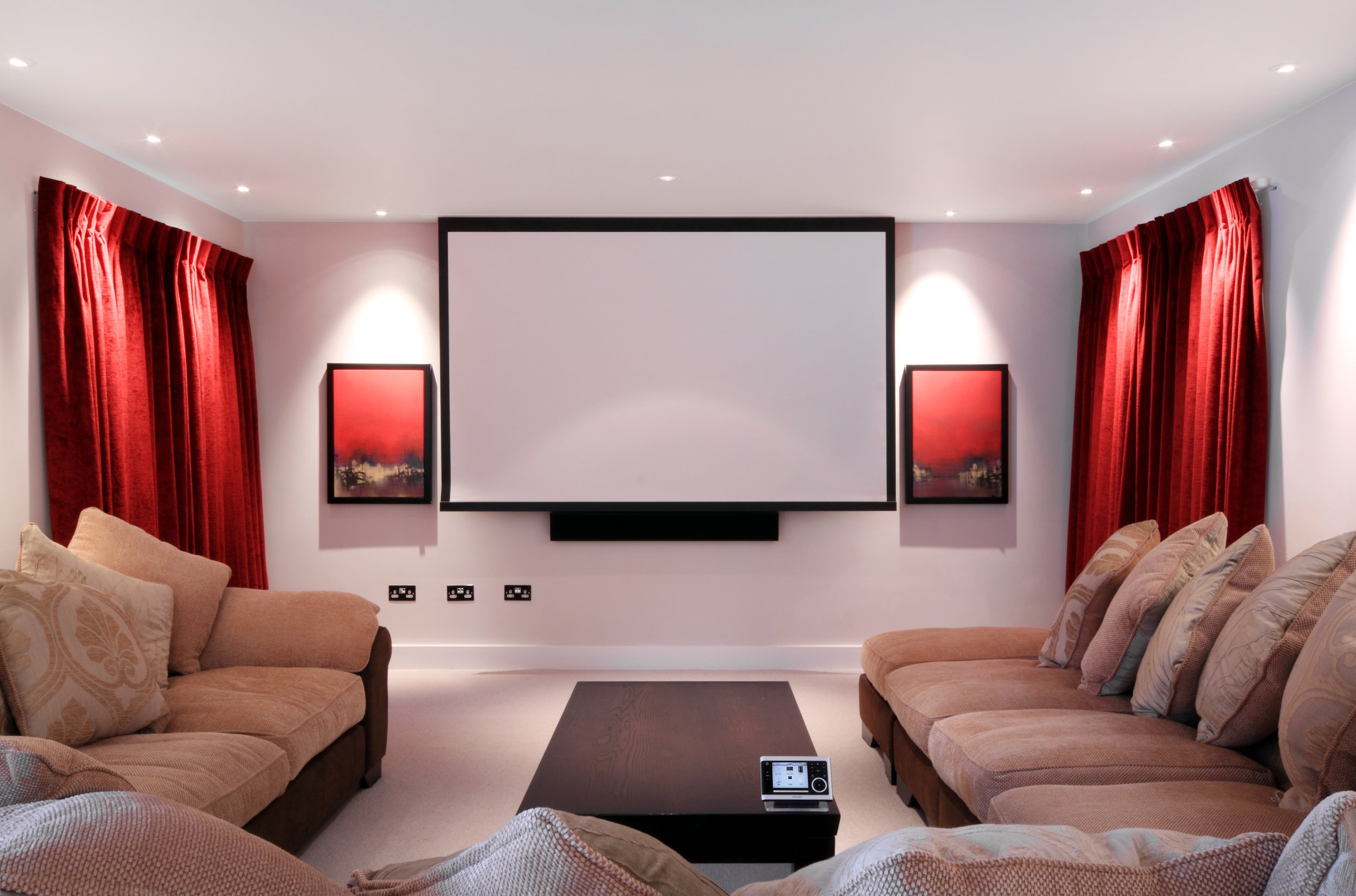
A single command from the touchscreen controller triggers a programmed sequence: the projection screen descends from the ceiling, the projector powers on, lighting dims to cinematic levels and motorised curtains glide across the windows on either side of the screen.
This type of automated cinema transformation is common today, but at the time it represented a particularly innovative feature within a residential environment.
Technology Integrated Into the Room
A central aim of the design was to ensure that the technology complemented the interior rather than dominating it.
The room features a calm cream palette accented by bold elements of deep red inspired by traditional cinema curtains. Custom artwork speaker grilles introduce striking visual interest while echoing the rich colour of the motorised drapes framing the screen.
The result is a space that feels both theatrical and contemporary — combining classic cinema cues with a relaxed residential atmosphere.
A large L-shaped sofa and chaise lounge provide comfortable seating around a central coffee table, creating a sociable layout for both everyday use and movie nights.
Early Smart Control
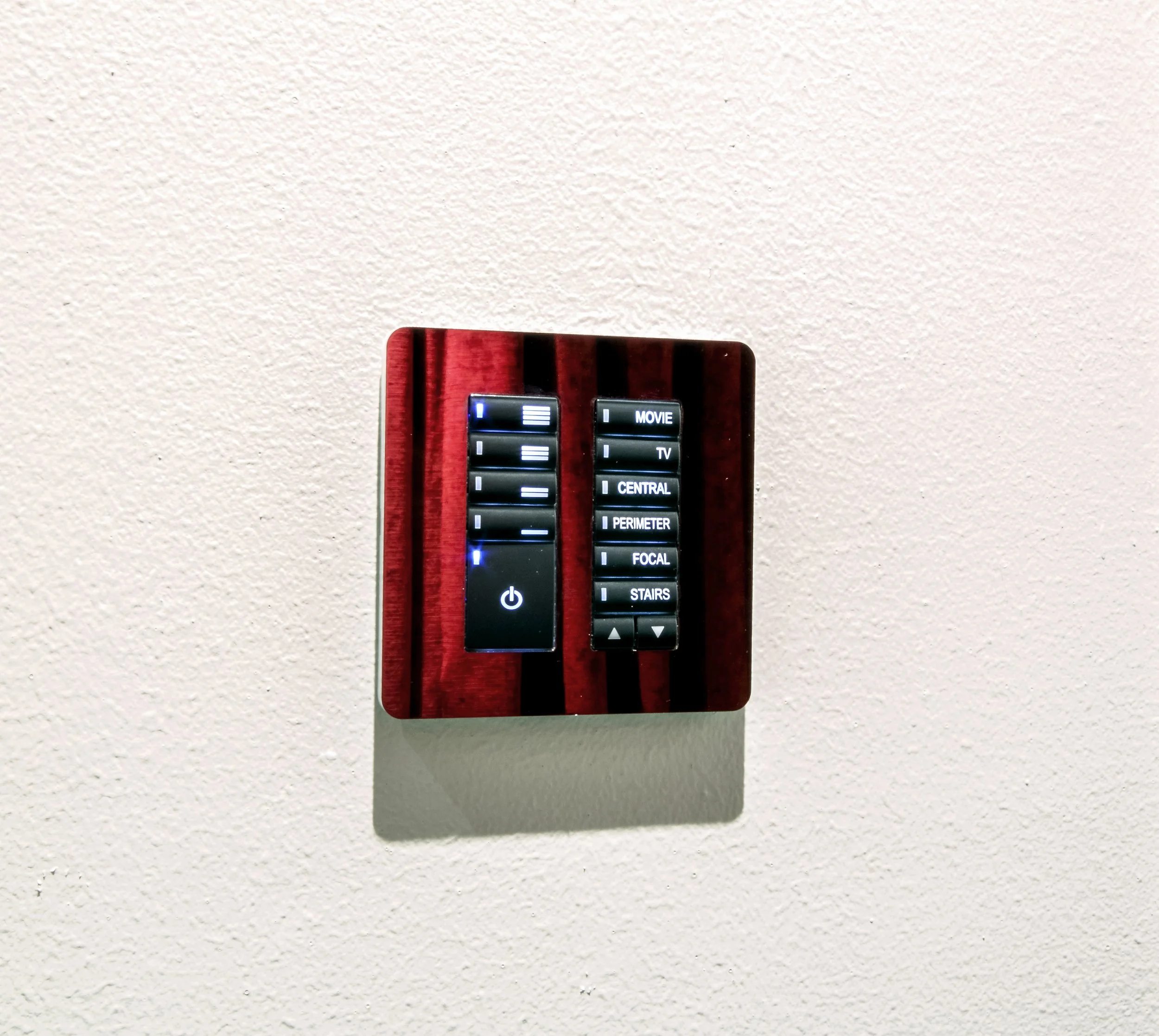
At the centre of the system sits a colour touchscreen controller — an impressive and forward-thinking interface at the time of installation.
From this single device, the user could control playback, lighting scenes and the room’s automated cinema sequence. Lighting and motorised curtains were integrated through scene-based control, allowing the space to transition effortlessly between different modes of use.
While smart control is now a familiar part of modern cinema rooms, the ability to orchestrate an entire cinematic environment from a handheld interface was still relatively novel in residential projects at the time.
Design Principles That Still Matter
Although the technology used in cinema rooms has evolved significantly since 2008, the core design principles behind this project remain central to how we approach cinema design today:
Integrating technology into the architecture of the room
Allowing spaces to transition between everyday use and immersive viewing
Combining lighting, shading and playback through intuitive control
Designing interiors that support the cinema experience
These principles continue to underpin the cinema rooms we design for clients today.
A Room Built for Long-Term Enjoyment
From the outset, the client’s goal was to create a space that would be enjoyable for many years to come. At the time of completion they were delighted with the finished result, particularly the seamless transformation between media room and cinema mode.
The project was delivered smoothly and the system went on to provide years of reliable enjoyment — a reminder that well-considered cinema design can endure long after the technology itself has evolved.